
Give A Second Life To Your Saree By Upcycling it for Sustainable Style | CloudTailor
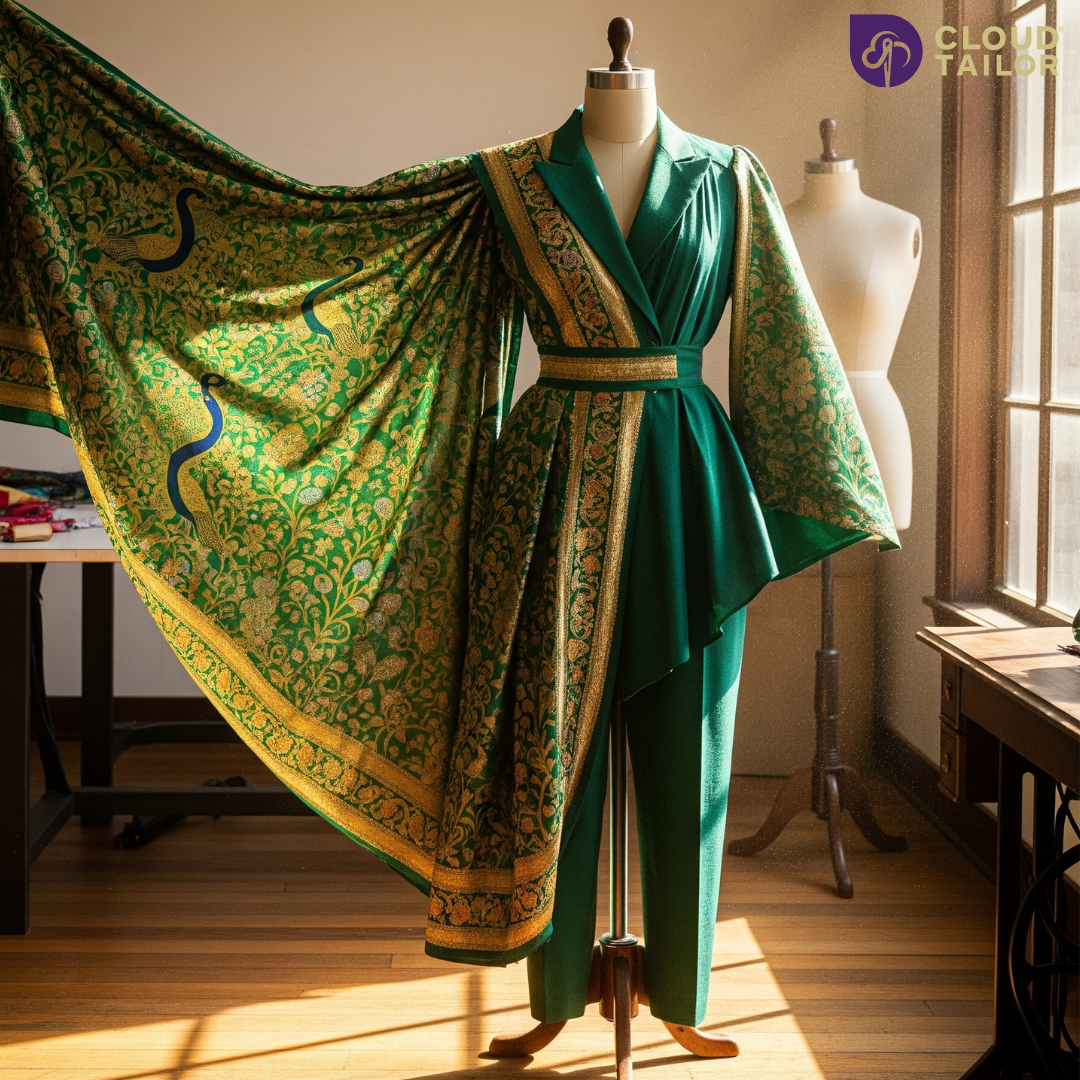
How can you repurpose an old saree? To give a second life to an old saree, you can upcycle it into entirely new garments such as a dress from old saree fabric, a voluminous saree skirt, a contemporary fusion gown, or even everyday kurtis. This process, often called upcycling, allows you to preserve the sentimental value of the fabric while creating a sustainable, trendy outfit that fits your current lifestyle.
Sarees are more than just six yards of fabric; they are heirlooms, memories, and pieces of art wrapped in tradition. However, we often find ourselves with stacks of sarees that are too beautiful to throw away but rarely get worn. Perhaps they are slightly damaged, out of vogue, or simply too heavy for daily wear. This is where the magic of upcycling comes in. Transforming an old saree into a contemporary outfit is not just a fashion statement; it is a commitment to sustainable style.
At CloudTailor, we believe in the power of personalized fashion. Our mission is to bridge the gap between traditional tailoring and modern needs, and one of the most creative ways we do this is by helping you reimagine your wardrobe. Whether you want to create a flowing saree dress or a chic saree skirt, this guide will walk you through the endless possibilities of saree upcycling.

Why Upcycle Your Old Saree?
Before diving into the "how," let's look at the "why." Upcycling is a core tenet of sustainable fashion. By repurposing existing textiles, you reduce the demand for new fabric production, thereby lowering your carbon footprint.
Furthermore, many old sarees—especially Kanjeevarams, Banarasis, and Mysore Silks—feature a quality of craftsmanship that is hard to find or incredibly expensive in today's market. Upcycling allows you to retain that high-quality material and intricate embroidery while adapting the silhouette to something you will actually wear, like a dress from old saree material.
Assessing Your Saree for Upcycling
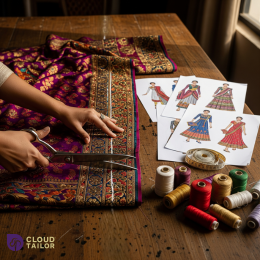
Not every saree is suitable for every type of garment. Before you decide to cut into your grandmother's vintage silk, you need to assess the fabric.
1. Fabric Condition
Check for tear and wear. Silk sarees often tear at the folds if kept for decades. Hold the saree up against the light to check for thinning areas. If the body is damaged but the pallu (border) is intact, you might design a jacket or a blouse rather than a full saree dress.
2. Fabric Type
- Heavy Silks (Kanjeevaram, Banarasi): These hold shape well and are excellent for structured garments like lehengas, box-pleated saree skirts, or jackets.
- Flowy Fabrics (Chiffon, Georgette, Crepe): These drape beautifully and are perfect for Anarkalis, maxi dresses, or shararas.
- Cottons: ideal for casual wear like straight kurtis, summer dresses, or jumpsuits.
3. Border and Pallu
Decide if you want to keep the borders. Heavy zari borders can be detached and re-attached to the hem of a new dress from old saree fabric, or used as trim for sleeves and necklines.
Top Trending Ideas to Transform an Old Saree
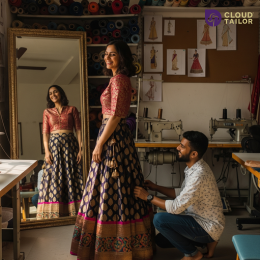
If you are wondering what to make, here are the top design ideas our designers at CloudTailor recommend.
1. The Classic Anarkali or Gown
One of the most popular ways to create a dress from old saree fabric is the floor-length Anarkali.
- The Look: This style uses the large volume of fabric available in a saree to create a flared silhouette.
- Best Saree Type: Silks and Georgettes.
- Design Tip: Use the saree’s intricate border at the hem of the Anarkali. The pallu can often be used to create the bodice (upper part) of the dress for a contrasting, rich look. This transforms a traditional drape into a red-carpet-ready saree dress.
2. The Contemporary Saree Dress (Midi or Maxi)
For a more modern, westernized look, consider a midi or maxi dress.
- The Look: A fusion wear piece that can be worn to brunch or work.
- Best Saree Type: Cotton, Linen, or light Silks.
- Design Tip: A shift dress or an A-line dress made from a printed cotton saree is perfect for Indian summers. You can add pockets for functionality—a feature rarely found in traditional sarees!
3. The Voluminous Saree Skirt
If you aren't ready to commit to a full dress, a saree skirt is a versatile option.
- The Look: An ethnic skirt that can be paired with a white shirt for a fusion look or a crop top for a festive vibe.
- Best Saree Type: Heavy silks like Banarasi or Brocade.
- Design Tip: Use the entire length of the saree to create pleats. A box-pleated skirt made from a silk saree looks regal and holds its shape perfectly without needing a can-can underneath.
4. The Statement Jacket or Cape
Layering is a huge trend, and an old saree can make for a stunning outer layer.
- The Look: Long jackets, shrugs, or kimonos.
- Best Saree Type: Sheer fabrics like Organza or heavy decorative pallus.
- Design Tip: Turn a heavy, ornate pallu into the back panel of a long jacket. This can be worn over jeans and a tank top to instantly elevate a casual outfit.
5. Kurtis and Salwar Suits
For practical, daily wear, turning a saree into a Kurti set is a no-brainer.
- The Look: Straight cut kurtis, A-line kurtis, or even full salwar suits.
- Best Saree Type: Any.
- Design Tip: A single saree usually has enough fabric to make a Kurti and a pair of matching pants (if the saree is plain) or a Kurti and a dupatta. This is a great way to get a "Standardised Quality Process" of stitching for your daily wardrobe using fabric you already own.
The CloudTailor Upcycling Process
Upcycling requires a bit more visualization than stitching fresh fabric because you are working with existing patterns and borders. This is where CloudTailor’s expertise comes in. We offer a hybrid model of online convenience and expert consultation.
Step 1: Consultation
The first step is to "Talk To Your Designer". You can show the old saree via a video call. The designer will assess the fabric's strength and the placement of motifs to recommend the best silhouette, whether it's a dress from old saree material or a saree skirt.
Step 2: Customization and Measurement
Once the design is finalized—say, a pleated saree dress with a boat neck—we take your specific measurements. Our "data analytics" supported process ensures accuracy. You can choose the lining, the type of sleeves, and even add embellishments.
Step 3: Stitching and Delivery
Your order goes to our fulfillment center for our "Standardised Quality Process". We handle the cutting carefully to maximize the design elements of the saree (like centering the pallu design on the back). Finally, the new garment is shipped to you, ready to be worn and loved again.
Tips for Caring for Upcycled Saree Garments
Once you have your beautiful new dress from old saree fabric, you want to ensure it lasts.
- Dry Clean Only: If the original saree was a dry-clean-only silk, the new dress is too. Do not wash it at home just because the silhouette has changed.
- Storage: Store silk dresses in muslin cloth to let the fabric breathe. Hang heavier items on padded hangers to avoid shoulder bumps.
- Air it Out: Vintage fabrics need air. Take them out of the wardrobe occasionally to prevent the fabric from becoming brittle.
Conclusion
Upcycling is not just about saving money or fabric; it is about carrying forward stories. That old saree lying in your wardrobe might be a memory of a wedding, a gift from a loved one, or a purchase from your first paycheck. By turning it into a dress from old saree fabric or a stylish saree skirt, you ensure those memories don't just sit in the dark—they get to walk in the sun with you.
Fashion is cyclical, but style is personal. With CloudTailor’s "Online Tailoring" services, you have the freedom to redefine your style sustainably. Don't let your beautiful sarees gather dust. Reimagine them, repurpose them, and wear them with pride.
Ready to transform your wardrobe? Book an appointment with CloudTailor today to start your upcycling journey!
Frequently Asked Questions (FAQs)
Q1: Can any old saree be turned into a dress?
A: Most can, but the fabric condition matters. If the fabric is tearing at the touch, it cannot support the tension of stitching seams for a fitted saree dress. In such cases, using it for patches or less stressed items like scarves is better.
Q2: How much fabric is needed for a dress from old saree?
A: A standard saree is 5.5 to 6 meters, which is usually more than enough for a floor-length Anarkali, a flared gown, or a maxi dress. You might even have fabric left over for a matching mask or potli bag.
Q3: Can I combine two old sarees into one outfit?
A: Absolutely! This is a great way to create a color-blocked saree dress. You can use the body of one saree for the skirt and the border or body of another for the bodice and sleeves. Our designers can help you coordinate the colors effectively.
Q4: Is it expensive to upcycle a saree?
A: The cost is generally for the stitching and any additional lining or trims required. Since you already own the main fabric (the saree), it is often more cost-effective than buying a new designer outfit from scratch, and you get a custom fit.
Q5: What if my saree has a very heavy border?